Services
Glaucoma Diagnosis and Treatment
Glaucoma is a chronic disease in which the optic nerve is gradually damaged, most often because of raised intraocular pressure. Lost vision cannot be restored, but treatment started in time — eye drops, laser or surgery — significantly slows the disease. In its early stages glaucoma has no symptoms, so regular checks of eye pressure and the optic nerve are what matters most.
Updated:
At a glance
- What is checked
- Eye pressure, optic nerve, visual field
- Tests
- Tonometry, OCT, perimetry, gonioscopy
- Treatment
- Drops, laser or surgery — tailored to each patient
- Who should be tested
- Everyone over 40, even without symptoms
- Appointments
- Kyiv Hospital #4 and Viva Medical Clinic, Chaiky
Why glaucoma is called the "silent thief of sight"
The most common form, open-angle glaucoma, develops slowly and painlessly. Peripheral vision narrows first, and people don't notice: the other eye compensates and the brain "fills in" the picture. By the time symptoms are noticeable, a large share of the optic nerve fibers has already been lost. Late-stage signs include:
- Narrowing of the visual field ("tunnel vision")
- Haze or halos around lights
- Worse vision at dusk
- Headache in the temples or around the eyes
An acute angle-closure glaucoma attack looks different: sudden severe eye pain, redness, sharp loss of vision, nausea or vomiting. This is an emergency — seek help immediately.
Who should be tested
Everyone over 40 should have their eye pressure and optic nerve checked, even without symptoms. Take particular care if you have risk factors:
- Glaucoma in a parent or close relative
- Age over 60
- Nearsightedness or farsightedness
- Diabetes and cardiovascular disease
- Long-term use of corticosteroids — drops, tablets or inhalers
How glaucoma is diagnosed
A single pressure reading neither confirms nor rules out glaucoma — the diagnosis is based on a set of tests:
- Tonometry — measuring intraocular pressure
- Ophthalmoscopy — examining the optic disc
- OCT (optical coherence tomography) — assessing the retinal nerve fiber layer and optic nerve
- Perimetry — testing the visual field
- Gonioscopy — examining the drainage angle to determine the type of glaucoma
- Pachymetry — measuring corneal thickness, which affects pressure readings
How glaucoma is treated
The goal is to lower eye pressure to a level at which the optic nerve is no longer damaged. This "target" pressure is set individually for each patient.
- Eye drops — the first line of treatment, used daily and long-term
- Laser treatment — selective laser trabeculoplasty improves fluid outflow; laser iridotomy is used when the angle is closed
- Surgery (trabeculectomy and other operations) — when drops and laser are not effective enough
Glaucoma care means long-term monitoring: regular check-ups show whether the target pressure is reached and whether the visual field and optic nerve remain stable. Never stop your drops on your own, even if you feel fine.
Frequently asked questions
Can glaucoma be cured completely?
No, but it can be controlled. Lost vision doesn't come back, but with proper treatment and regular monitoring most patients keep their sight.
Does normal eye pressure mean I don't have glaucoma?
No. In normal-tension glaucoma the optic nerve is damaged despite normal readings. Conversely, raised pressure doesn't always mean glaucoma. That is why the diagnosis is made only after a full examination.
How often should glaucoma be checked?
The doctor sets the frequency based on the stage and stability of the disease — usually every 3–12 months.
Can cataract surgery be done if I have glaucoma?
Yes. Cataract and glaucoma often occur together in older people. In that case cataract surgery is planned with your eye pressure and optic nerve condition in mind.
How do I book an eye pressure check?
Call Kyiv City Clinical Hospital #4 (+380 99 828 08 84) or Viva Medical Clinic in Chaiky (+380 67 530 15 68). The visit includes a pressure measurement and optic nerve assessment; further tests are ordered if needed.
Related articles
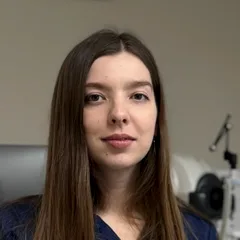
Medically reviewed by
Iryna HetmanOphthalmologist, Cataract Surgeon · Kyiv Hospital #4 · Viva Clinic
- Over 500 successful surgeries
- Member of ESCRS and USCRS
Book an Appointment
Have questions? Schedule a consultation
Ophthalmologist Iryna Hetman sees patients at Kyiv City Clinical Hospital #4 and Viva Medical Clinic in Chaiky. Book your appointment today.
Book NowOther services